

Understanding your customers’ paths? Not easy. Each person arrives with their own reason for visiting your site and takes their own route through your pages.
So how do you gain real insights to improve usability and spot buying trends?
Start with building a customer journey map.
In this blog, we’ll walk you through what a customer journey map is, how to build a customer journey map, which templates work best for your customer journey map, and how to put them into action. Let’s get started!
What is a customer journey map?
A customer journey map is a visual tool that shows how customers interact with your business or website—from start to finish.
It helps you spot where things aren’t working and improve the overall experience.
Think of it as a story told visually. It maps out:
- What customers do
- What they think
- How they feel
At the heart of the map are touchpoints—specific moments where customers interact with your brand. Maybe they’re researching a product, making a purchase, waiting for delivery, or requesting a return.
Each touchpoint can be positive, neutral, or negative from the customer’s perspective. Your job? Make more of them positive.
Customer journey mapping requires a mix of hard data, customer feedback, and creative thinking. No two maps are the same—and that’s the point. Every business is different.
7 Reasons Why Use Customer Journey Maps
Customer journey mapping isn’t just a nice-to-have—it’s a strategic tool that drives real business results.
Here’s why it matters:
1. See Through Your Customers’ Eyes
Journey maps help you step into your customers’ shoes. You’ll understand their motivations, expectations, and frustrations at every stage—not just what they do, but why they do it.
That empathy translates into better decisions, smarter strategies, and experiences that actually resonate.
2. Spot and Fix Pain Points Fast
Every journey has friction. Your checkout process might be too complicated, your search function delivers the wrong results, or customers can’t find help when they need it.
Customer journey mapping reveals these bottlenecks so you can address them before they cost you customers.
3. Build Loyalty That Lasts
When customers feel understood and valued, they stick around. By removing barriers and meeting needs at every touchpoint, you strengthen the emotional connection between your brand and your audience. That connection drives repeat purchases and long-term loyalty.
In fact, a 5% increase in customer retention can lead to a 25% increase in profits.
4. Personalize at Scale
Not all customers are the same—and your experience shouldn’t treat them that way. Journey maps highlight individual preferences and behaviors, enabling you to tailor messaging, product recommendations, and support to each person.
Personalization increases purchase likelihood and makes customers feel like you actually get them.
5. Align Your Entire Team
Customer journey mapping breaks down silos. When marketing, product, sales, and support all work from the same map, everyone understands the customer’s perspective and how their work impacts the overall experience.
That shared understanding leads to better collaboration, faster problem-solving, and a more cohesive brand experience.
6. Make Smarter, Data-Driven Decisions
Journey maps aren’t just pretty visuals—they’re strategic tools backed by real data.
They guide decisions about where to invest, what to test, and which initiatives will have the biggest impact on customer satisfaction and business growth.
7. Drive Innovation and Stay Ahead
Customer needs evolve. Markets shift. New competitors emerge.
Regularly reviewing and updating your customer journey map helps you spot emerging trends, changing preferences, and new opportunities before your competitors do. It keeps your brand agile, innovative, and ready to adapt.
The Heart of Customer Journey Mapping: Buyer Personas
Buyer personas are fictional characters based on real customer data. They represent your audience in a way that’s relatable and actionable.
Most projects create between three and seven personas—and each one gets its own customer journey map. Why? Because different customers have different needs, goals, and pain points. A persona helps you walk in their shoes and design experiences that truly resonate.
Personas aren’t perfect replicas of real people. They’re broad representations that guide smarter decisions.
Who Benefits from a Customer Journey Map?
Short answer: everyone.
Customer satisfaction drives loyalty more than ever. People are more informed, more demanding, and more willing to shop around.
A well-designed customer journey map helps you:
- Highlight problems customers face
- Build stronger relationships with your brand
- Keep customers at the center of every decision
Once your map is ready, your entire team—from marketing to product to support—can use it to stay aligned and customer-focused.
Bringing Your Whole Business Together
Customer journey mapping isn’t just for your customer-facing teams. It brings everyone together.
When you map out touchpoints, departments that don’t usually interact with customers start to see how their work affects the experience. That’s powerful.
For example:
- How easy is it for someone to find return instructions on your site?
- How fast do they get a response when they need help?
- What happens after the purchase?
Traditional marketing often stops at checkout. But the customer journey doesn’t. Post-purchase experience matters just as much—and your map should reflect that.
How to Map the Customer Journey Visually?
A customer journey map gives you a clear picture of your customers’ experiences from their point of view.
To create one, focus on two things:
- Defining customer goals – What are they trying to accomplish?
- Understanding their nonlinear journey – Customers don’t move in straight lines
By mapping every interaction, you’re identifying opportunities to delight your customers and craft smarter engagement strategies.
According to Aberdeen Group, 89% of companies with multi-channel engagement strategies retained their customers—compared to just 33% of those without one.
You can build your map using:
- Excel sheets
- Infographics
- Diagrams
- Illustrations
Customer journey maps also help with:
- Retargeting with an inbound mindset
- Reaching new customer segments
- Building a customer-first culture
All of this leads to better experiences, more conversions, and stronger revenue.
Want to go deeper? Check out our digital customer journey resource kit →
Types of Customer Journey Map Templates
There are four main types of customer journey maps. Each highlights different behaviors and serves different goals.
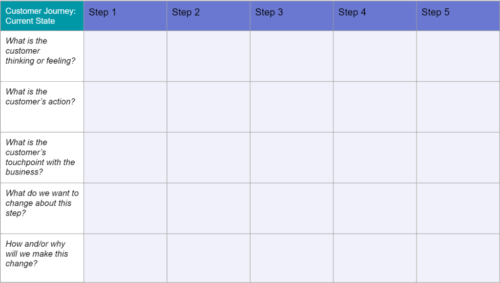
1. Current State Template
Shows what customers currently do, think, and feel. Great for spotting pain points and making incremental improvements.
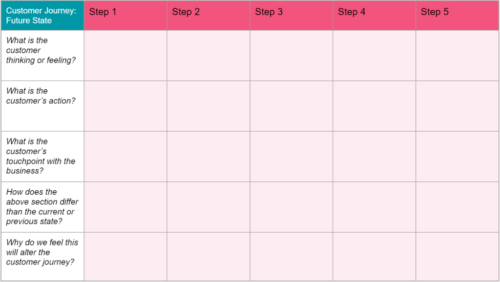
2. Future State Template
Focuses on what customers will do, think, and feel. Useful for planning new products, services, or experiences.
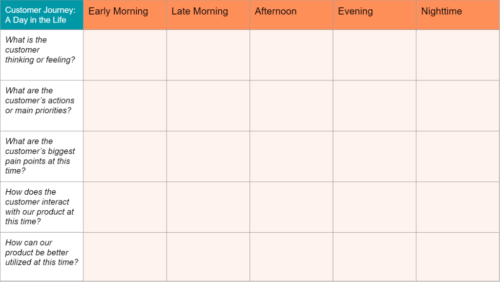
3. Day in the Life Template
Similar to the current state map, but broader. It looks at how customers behave with your brand and your competitors. Perfect for uncovering unmet needs.
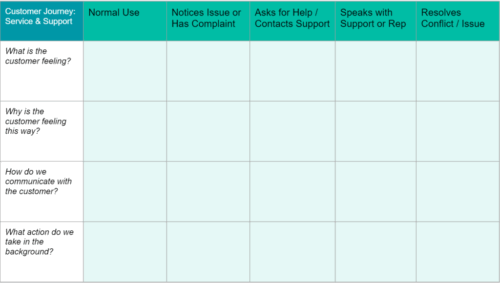
4. Service Blueprint Template
Starts with a simplified current or future state map, then adds the internal processes, people, and tech behind the experience. Helps you see the full picture—front and back.
How to Create a Customer Journey Map in 7 Steps ?
Creating customer experience journey maps takes time, but the payoff is worth it. Here’s how to do it.
Step 1: Create Buyer Personas
Start with a clear objective. Who is this map for? What are you trying to learn?
Building personas is the most time-consuming part—but also the most important. You’ll need:
- Demographics: age, gender, occupation, income, location
- Psychographics: preferences, motivations, pain points
The more detail, the better. Use surveys, interviews, analytics, and customer feedback to build realistic personas.
Collecting concrete data on your customers helps you serve them better and deliver a more personalized user experience.
Step 2: Select Your Target Customer
Pick one persona and go deep. Trace their first interaction with your brand and map their journey from there.
Ask:
- What questions are they trying to answer?
- What’s their biggest priority?
Step 3: List Customer Touchpoints
Touchpoints are every interaction someone has with your brand—your website, social media, ads, emails, reviews, and more.
List them all. Then ask:
- Which touchpoints get the most engagement?
- Which ones need work?
Remember: customer journey mapping is unique to your business. What works for one brand won’t work for another.
Step 4: Identify Customer Actions
Break the journey into individual actions. What do customers do at each step?
By zooming in on micro-engagements, you can:
- Spot obstacles
- Reduce friction
- Move people forward faster
Use your personas to troubleshoot problem areas and predict what customers will do next.
Step 5: Understand Your Available Resources
Your map shows how every part of your business supports the customer experience.
Use it to assess:
- Which touchpoints need more support
- Whether your resources are enough
- How new investments will impact ROI
Step 6: Analyze the Customer Journey
Now it’s time to put it all together. Look at your data, touchpoints, and goals.
Ask:
- Where is the experience meeting expectations?
- Where are the gaps?
Mapping what’s working well is just as important as spotting problems. Some elements can be applied to other areas.
Walk through the journey yourself—with each persona. Test it across social media, email, and your website. See where things break down.
One of the best ways to find issues? Customer feedback—through surveys, support transcripts, and reviews.
Watch our webinar to learn how master the user journey through A/B testing →
Step 7: Take Action
Your map is only valuable if you act on it.
Use it to:
- Address pain points
- Test new ideas
- Continuously improve
A great way to validate changes? A/B testing.
AB Tasty is a best-in-class experimentation platform that helps you test variations, personalize experiences, and convert more customers—fast. With AI and automation built in, you can optimize the digital experience with confidence.
Once your map is live, review and update it regularly. Customer journeys evolve—and so should your map.

How to Collect Journey Mapping Data?
Great customer experience journey maps are built on solid data—not assumptions. You’ll need a mix of qualitative insights (the “why” behind behavior) and quantitative metrics (the “what” you can measure).
Here’s how to gather both:
1. Qualitative Data: Understanding the “Why”
Qualitative research helps you uncover motivations, emotions, and pain points that numbers alone can’t reveal.
Customer Interviews
Have real conversations with your customers. Ask about their experiences, what frustrates them, and what they love. These in-depth discussions provide rich, nuanced insights.
Surveys
Use open-ended questions to gather feedback on specific parts of the journey. Keep them short and focused to get honest, actionable responses.
User Testing
Watch how people interact with your website or product in real time. Tools like usability tests reveal where users get stuck, confused, or frustrated.
Mystery Shopping
Experience your own customer journey firsthand. Walk through every step—from discovery to purchase to support—and see what works and what doesn’t.
Support Transcripts
Review customer service conversations to identify recurring issues and common questions. These transcripts are goldmines for understanding pain points.
2. Quantitative Data: Tracking the “What”
Quantitative data gives you measurable, trackable insights that help you validate assumptions and monitor progress over time.
Website Analytics
Tools like Google Analytics show you how customers navigate your site, where they drop off, and which pages drive the most engagement.
Session Recordings and Heatmaps
See exactly how users interact with your pages—where they click, how far they scroll, and where they hesitate. Tools like Hotjar and Contentsquare make this easy.
Conversion Funnels
Track how customers move through key stages of the journey and identify where they abandon the process.
Customer Satisfaction Scores
Metrics like Net Promoter Score (NPS) and Customer Satisfaction (CSAT) measure loyalty and satisfaction at different touchpoints.
CRM Data
Your CRM system (like Salesforce or HubSpot) holds valuable information about customer interactions, purchase history, and behavior patterns.
Social Media Listening
Monitor what customers say about your brand on social platforms. This reveals sentiment, trends, and unfiltered feedback.
Email Campaign Metrics
Analyze open rates, click-through rates, and conversion rates to understand how customers engage with your messaging.
Support Ticket Volume
Track common issues and complaints to identify systemic problems in the customer journey.
Best Practices for Journey Map Data Collection
Combine Both Types of Data
Qualitative insights explain why customers behave a certain way. Quantitative data shows you what they’re doing. Together, they give you the full picture.
Test Your Assumptions
Don’t rely on guesses. Validate your hypotheses about customer behavior through research and real data.
Involve Stakeholders
Gather input from marketing, sales, product, customer service, and leadership. Each team has unique insights that make your map more accurate and actionable.
Keep It Current
Customer behavior changes. Markets evolve. Your journey map should too. Update it regularly to stay relevant and effective.
Customer Journey Map Examples
Customer journey maps come in all shapes and sizes. Some look like works of art. Others are simple sketches. What matters is clarity.
Here are some real-world examples of customer journey mapping in action:
1. David Jones: Simplifying Account Access
David Jones, a major Australian retailer, mapped their customer journey to understand how shoppers interacted with their account features during the buying process.
Through testing and personalization, they made it easier for customers to access their accounts, track orders, and manage preferences.
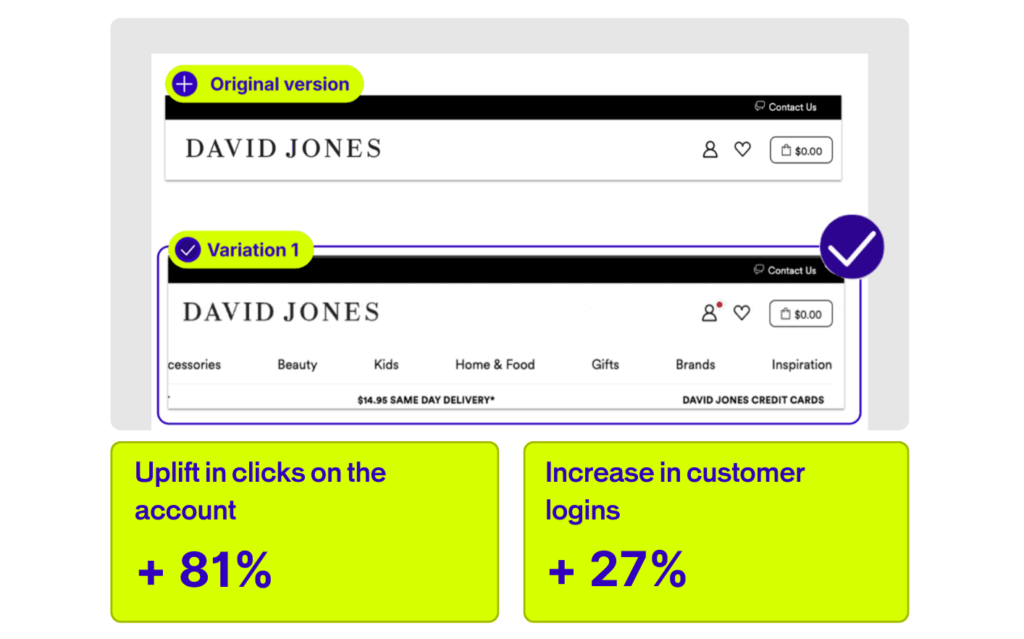
Explore the David Jones strategy →
2. WWF: Making Donations Feel Natural
WWF used customer journey mapping to understand why desktop users weren’t completing donations.
By testing different layouts and messaging that made giving feel more intuitive and less transactional, they removed barriers in the donation flow.
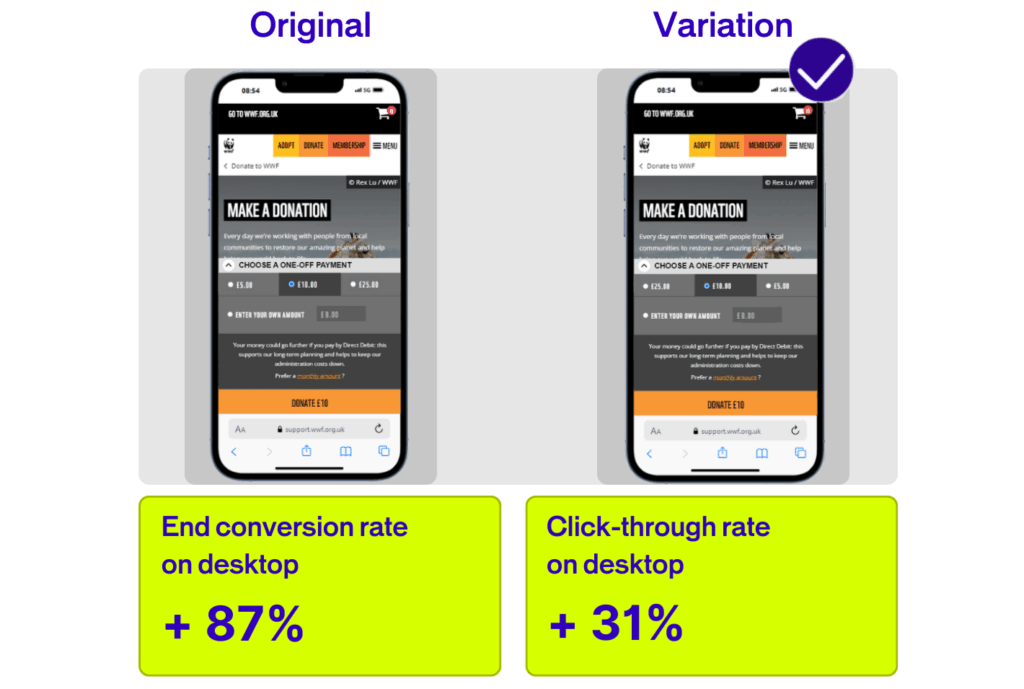
These examples show that even small changes—when guided by customer journey mapping—can drive meaningful results.
These examples show that even small changes—when guided by customer journey mapping—can drive meaningful results.
The Truth About Customer Journeys
Customer journeys are always changing.
Customer journey mapping helps you stay close to your customers, address their needs, and adapt as they evolve.
Maps give you a visual understanding of your audience. They help you stay customer-focused and make smarter decisions.
With regular updates and a commitment to removing roadblocks, your brand can:
- Stand out
- Deliver meaningful engagement
- Drive real business growth
Try, learn, iterate—then go again.
Conclusion
Customer journey mapping isn’t a one-time project—it’s an ongoing practice that keeps you connected to your customers.
When you understand what people need, where they struggle, and what delights them, you can create experiences that truly resonate.
The best part? You don’t need to be perfect. Start small. Test often. Learn continuously.
With the right tools, a customer-first mindset, and a commitment to iteration, you’ll build journeys that drive engagement, loyalty, and growth.
Ready to go further? Let’s build better experiences together →